Last updated 2026-08-18
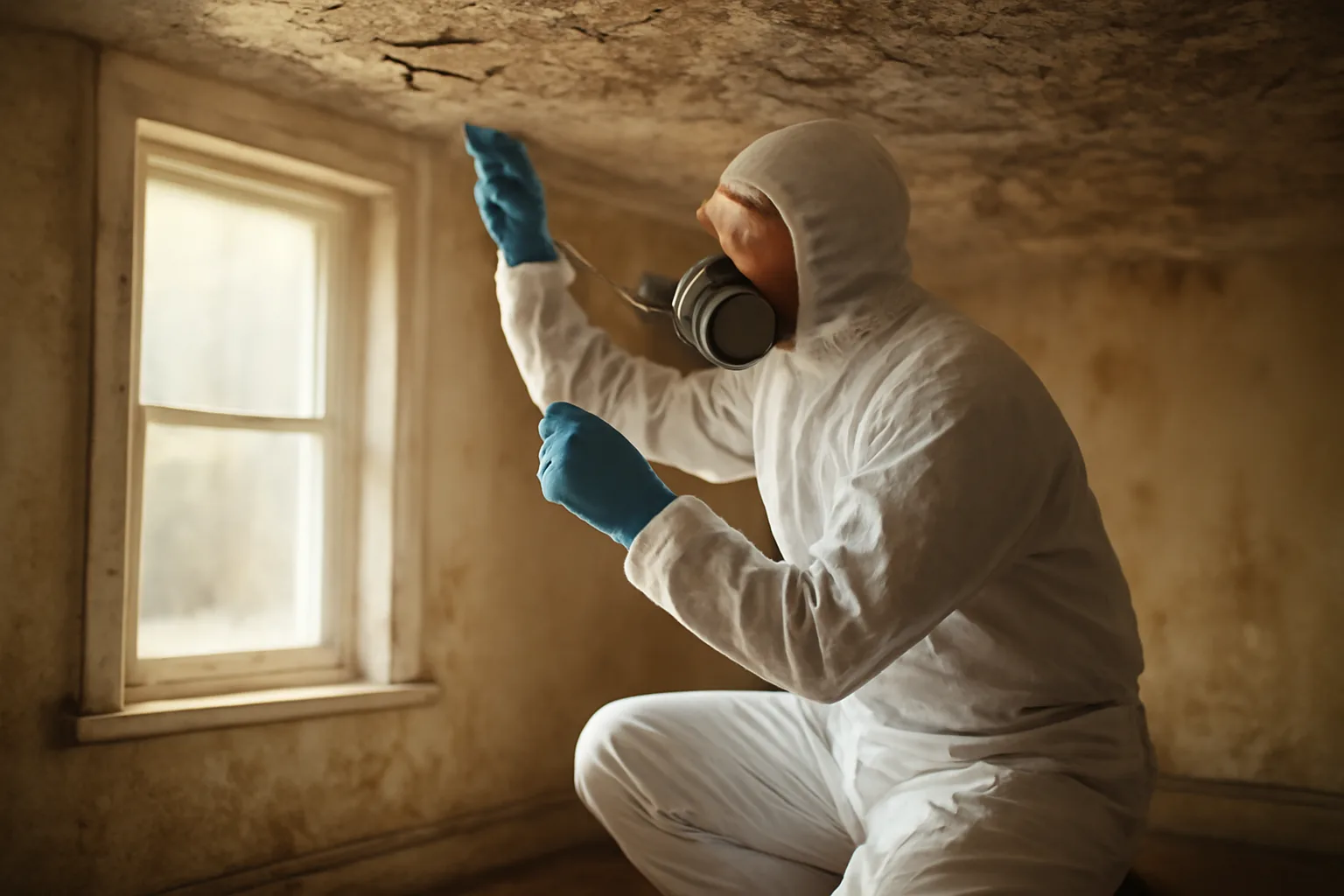
TL;DR
Arkansas requires asbestos inspectors to hold a state license from the Arkansas Department of Health, finish EPA-accredited AHERA inspector training (24 hours minimum), and pass the course exam. Initial training runs roughly $400 to $700. The state license fee is set by ADH, so confirm the current amount with the agency. Plan on four to eight weeks from training start to licensed.
Do you need a license to work as an asbestos inspector in Arkansas?
Yes, full stop. Anyone who inspects public and commercial buildings for asbestos in Arkansas has to hold a current state license from the Arkansas Department of Health (ADH), Asbestos and Lead Program. This isn't paperwork you can skip while you get your footing. Unlicensed inspection work violates the Arkansas Asbestos Act (Arkansas Code Annotated § 20-27-1001 et seq.), and the state can hit you with civil penalties. [1]
The federal floor matters too. EPA's Asbestos Hazard Emergency Response Act (AHERA) regulations at 40 CFR Part 763 require inspectors working in schools to be accredited through an EPA-approved state training program. Arkansas runs its own accredited program that meets and builds on that baseline. So you're dealing with two layers: federal accreditation under AHERA and a separate Arkansas state license. Related, but distinct. You need both to work legally. [2]
One thing trips people up. If you only want to inspect single-family homes, the picture shifts a little, because AHERA mostly covers schools and public or commercial buildings. In practice, though, Arkansas clients and employers want licensed inspectors no matter the building type. Getting fully licensed from day one is the smarter play.
For a closer look at how Arkansas structures its license categories against neighboring states, see how to start as an asbestos inspector in Alabama or how to start as an asbestos inspector in Colorado.
What are the exact training requirements for an asbestos inspector license in Arkansas?
The AHERA regulations at 40 CFR § 763.90 set the floor: an initial inspector course of at least 24 contact hours. That covers classroom work on identification, sampling procedures, recordkeeping, and health effects, plus a field component where you actually practice bulk sampling. The course ends with a written exam you have to pass before you get a certificate of completion. [2]
Arkansas accepts training from EPA-accredited providers only. EPA publishes a list of accredited training providers by discipline, and not every national provider stays current, so check EPA's accreditation resources before you pay for a course. [3]
After the initial 24-hour course, inspectors have to complete annual refresher training (8 hours) to keep their AHERA accreditation and, in turn, their Arkansas license. Miss a refresher and you're worse than lapsed on paper. You're unlicensed in the field until you get current.
The course hits the core topics EPA specifies: background on asbestos, potential health effects, personal protective equipment, bulk sampling, and legal and regulatory requirements. Some providers add Arkansas-specific content. Ask whether ADH has approved a given curriculum, because some out-of-state courses carry national AHERA accreditation but never went through ADH's review. A quick call to ADH before you enroll saves headaches.
How much does becoming an asbestos inspector in Arkansas cost?
There are three real cost buckets: training, the state license fee, and ongoing annual refresher training.
Training. Initial 24-hour AHERA inspector training from an accredited provider runs roughly $400 to $700 depending on the provider, the format (in-person versus blended), and whether materials are included. Online-only courses tend to be cheaper, but check that ADH accepts them before you register. [3]
State license fee. ADH charges a licensing fee. Confirm the exact current amount directly with the ADH Asbestos and Lead Program, because fee schedules change and no outside publisher should quote a number that might be stale. Call ADH at (501) 661-2534 or ask for the current Environmental Health Services fee schedule. [4]
Annual refresher. The 8-hour annual refresher runs about $150 to $300 from most accredited providers.
Here's a realistic cost snapshot based on those ranges.
| Item | Low estimate | High estimate |
|---|---|---|
| Initial 24-hr AHERA inspector training | $400 | $700 |
| Arkansas state license fee | Confirm with ADH | Confirm with ADH |
| Annual refresher (8-hr) | $150 | $300 |
| Sampling equipment (starter kit) | $200 | $600 |
| Total first-year (excluding license fee) | ~$750 | ~$1,600 |
Sampling equipment isn't strictly a licensing cost, but you can't do field work without it, so it belongs in the first-year budget. A decent starter kit runs a HEPA-filtered respirator, disposable Tyvek suits, sample containers, a core sampler, and a wetting agent.
If you're building a management planner capability alongside your inspector credential, some bundled study resources cover both disciplines. AsbestosPath sells a $199 one-time AHERA Inspector plus Management Planner kit at /start that's worth a look if you're going that route, though it's a study resource, not a stand-in for ADH's required training course or license.
How long does it take to get an asbestos inspector license in Arkansas?
Four to eight weeks, realistically, from the day you enroll in training to the day you hold an active Arkansas license. Here's how that time splits up.
Training runs a minimum of three days for the 24-hour course if it goes full eight-hour days. Some providers spread it across four or five. Field practice is sometimes a half-day tacked on at the end. Count on three to five calendar days of actual instruction.
After you pass the course exam, the provider issues your AHERA certificate. That can take a few days to a week to arrive, depending on the provider's processing time.
Then you apply to ADH for the state license. ADH's turnaround varies, and the agency doesn't publish a guaranteed number. Practitioners generally report two to four weeks for complete applications. Incomplete ones (missing documents, wrong fee) reset that clock.
The practical move: get every document together before you submit. You'll typically need your AHERA training certificate, proof you passed the written exam, a completed ADH application form, and the fee. Confirm the exact current checklist with ADH before applying, because requirements shift. [4]
There's no statewide exam beyond the course exam your training provider gives. Unlike states that require a separate state-administered test, Arkansas leans on the AHERA course exam. That's one fewer scheduling bottleneck.
What does the Arkansas Asbestos Act actually require of inspectors?
Arkansas Code Annotated § 20-27-1001 through § 20-27-1014 is the governing statute. It sets up the licensing framework, hands administration to ADH, and lays out the civil penalty structure for violations. [1]
The Act defines an asbestos inspector as a person who inspects to determine whether asbestos-containing material (ACM) is present in a building, or who collects bulk samples of suspected ACM. That's the work that requires a license. You can't hand the inspection portion to an unlicensed employee or subcontractor and stay compliant.
The Act also ties into federal AHERA requirements. Arkansas Administrative Code 007.05.3 fills in the state rules, covering inspector qualifications, training provider approval, recordkeeping, and what has to appear in an inspection report. [5] Those report requirements matter in practice. ADH expects inspectors to document the homogeneous sampling area, the condition of suspect materials, the estimated quantity, and the friability assessment. If your reports miss required elements, clients can't use them for regulatory purposes and you risk license action.
One thing worth knowing. Arkansas inspectors working in schools also fall under the AHERA school regulations directly, which means the school's LEA (Local Education Agency) has its own obligations and your work feeds into the school's required management plan. Inspectors who understand that downstream requirement tend to write more useful reports.
How do you actually apply for an Arkansas asbestos inspector license?
The application goes to the ADH Asbestos and Lead Program. As of this writing, ADH handles applications by mail and in some cases in person. Check whether online submission is available now, because state agencies do update their processes. [4]
Here's the sequence that works:
1. Complete an EPA-accredited, ADH-accepted 24-hour initial inspector course and pass the course exam. 2. Get your AHERA certificate of completion from the provider. 3. Download the current ADH asbestos inspector license application form from the ADH website, or request it by phone. 4. Gather supporting documents: completed application, AHERA certificate, exam pass documentation, and the fee (check or money order made out as ADH specifies; confirm whether they take credit cards). 5. Mail or deliver the package to ADH Environmental Health Services. 6. Follow up after two weeks if you haven't heard back.
A few things applicants get wrong: an outdated application form (ADH revises them occasionally), a training certificate from a provider not on the ADH-approved list, and forgetting the fee. Any one of those delays your license.
Once approved, you get a wallet card and a license number. Keep both. Most clients and every regulated worksite in Arkansas will ask for your license number before you start work.
For comparison, see how to start as an asbestos inspector in Alaska or how to start as an asbestos inspector in Arizona to see how other states run their application process.
What training providers offer AHERA inspector courses accepted in Arkansas?
EPA maintains the national list of accredited training providers under AHERA, searchable by discipline (inspector) and state. [3] Not every provider on that list has cleared ADH's specific curriculum approval, which is a real distinction. Call ADH and ask: "Is [provider name] an approved training provider for the Arkansas asbestos inspector license?" Two minutes on the phone saves an expensive mistake.
In practice, several national providers deliver AHERA inspector training in Arkansas or through hybrid formats ADH accepts. The list changes. A provider approved two years ago may have let its accreditation lapse. Verify current status directly.
If you're in Little Rock, Fort Smith, or Fayetteville, in-person courses run in-state from time to time. In a rural area, an ADH-accepted online or blended course may be the practical option. Ask ADH straight out whether online-only initial training satisfies their requirement, because some states accept it and some don't for the initial course. Refreshers are more commonly allowed online.
Cost and schedule matter, but don't make them your only criteria. Course quality varies a lot. A good instructor who's done field work teaches you to recognize ACM in real buildings, more than recite regulatory text. That field instinct is what makes you useful on the first job.
What does the first year of operating as an asbestos inspector in Arkansas look like?
The first year is mostly building a client base and getting fast at fieldwork. Here's the practical picture.
Most new inspectors in Arkansas start under an established environmental consulting firm or abatement contractor. That's the fastest way to stack field experience, see different building types (schools, commercial, industrial), and learn what a defensible inspection report looks like. Solo work is possible but harder to land without a track record.
Rates for asbestos inspections in Arkansas swing by building size and type. Residential inspections (pre-demolition or pre-renovation surveys) commonly run $300 to $600. Commercial surveys can hit $1,000 to $5,000 or more depending on square footage and complexity. These are rough market ranges from contractor pricing talk. Nobody has published good Arkansas-specific survey data, so treat these as ballpark and price your first few jobs by pulling quotes from competitors.
Recordkeeping discipline matters from day one. Federal NESHAP regulations (40 CFR Part 61, Subpart M) require inspection records to be kept and available for regulated demolition and renovation projects. [6] ADH may audit your records at license renewal. Keep copies of every inspection report, sample chain of custody, and lab result.
Lab relationships are part of the infrastructure. You need an NVLAP-accredited laboratory to analyze bulk samples by polarized light microscopy (PLM) or, in some cases, transmission electron microscopy (TEM). The National Voluntary Laboratory Accreditation Program publishes the current list of accredited labs. [7] Turnaround (24-hour rush versus 5-day standard) shapes your pricing and project timelines, so open accounts with at least two labs early.
For a deeper look at the license itself and its renewal cycle, see asbestos inspector license in Arkansas.
What are the ongoing license maintenance requirements in Arkansas?
Arkansas ties license renewal to keeping current AHERA accreditation. That means finishing the 8-hour annual refresher course before your accreditation lapses. [2] Miss the refresher window and your AHERA accreditation expires, your Arkansas license goes invalid, and you can't legally work until you're current again.
The renewal cycle and fee for the state license itself should be confirmed with ADH. Some inspectors report annual renewal, others describe a biennial cycle, and the agency has the definitive answer. [4]
Continuing education beyond the AHERA refresher isn't currently mandated by Arkansas, but staying current on EPA guidance, sampling protocols, and court decisions affecting liability is practical self-protection. EPA updates its guidance periodically, and a technique that was standard five years ago can now draw criticism in litigation.
If your license lapses, Arkansas reinstatement generally requires proof you've completed current training and paid any applicable fees. Don't let it lapse while you're actively working. The lost income during a reinstatement gap usually dwarfs whatever cost you thought you were dodging.
How does Arkansas compare to nearby states for asbestos inspector licensing?
Arkansas sits in the middle for complexity next to neighboring states. Here's a quick comparison across the variables that matter.
| State | State license required | Initial training hours | Annual refresher | Separate state exam |
|---|---|---|---|---|
| Arkansas | Yes (ADH) | 24 (AHERA) | 8 hrs/yr | No (course exam only) |
| Alabama | Yes | 24 (AHERA) | 8 hrs/yr | No |
| Tennessee | Yes | 24 (AHERA) | 8 hrs/yr | Varies; confirm with TDEC |
| Texas | Yes (DSHS) | 24 (AHERA) | 8 hrs/yr | No |
| Missouri | EPA accreditation only for most work | 24 (AHERA) | 8 hrs/yr | No |
Sources: ADH [1][4], EPA AHERA [2], and state agency websites. Always confirm current requirements directly with each state's licensing agency before you assume this table is current.
The practical takeaway: if you're near a state border and want to work in more than one state, check whether any of them offer reciprocity or accept Arkansas training certificates. Most don't run formal reciprocity, so you may need a separate license in each state where you work regularly. See how to start as an asbestos inspector in Alabama for Alabama's specifics.
What else should you set up before taking your first Arkansas job?
License in hand isn't the same as ready to work. A few operational items matter.
Liability insurance isn't always legally required by ADH, but every serious client effectively requires it. Environmental consultants typically carry general liability with a pollution liability rider. Expect premiums of $1,500 to $4,000 a year for a sole operator, though rates ride heavily on your claims history and coverage limits. Get quotes from brokers who specialize in environmental contractors.
Some clients, especially public agencies and school districts, also require errors and omissions (E&O) coverage, which covers professional mistakes in your reports. That's a separate policy from general liability.
A written contract for every job is non-negotiable. Your contract should define scope (what buildings, what suspect materials), the sampling methodology you'll use, how you'll report results, your liability limits, and payment terms. An attorney with environmental or contractor experience in Arkansas can draft a template for $500 to $1,500 that you'll reuse for years.
Chain of custody for samples is a procedural discipline that protects you legally. Every sample gets logged at collection, sealed, and tracked from the field to the lab. If a result ever gets challenged, your chain of custody documentation is your defense.
AsbestosPath's AHERA Inspector and Management Planner Kit at /start covers the federal regulatory framework in a format built for practitioners setting up their first inspection workflow, if you want a structured reference alongside ADH's official materials.
Frequently asked questions
Do you need a license for asbestos inspector in Arkansas?
Yes. Arkansas requires a state license from the Arkansas Department of Health (ADH) Asbestos and Lead Program, plus current EPA AHERA accreditation from an accredited 24-hour initial training course. Working without a license violates Arkansas Code Annotated § 20-27-1001 et seq. and can bring civil penalties. Both the state license and AHERA accreditation have to stay current through annual refresher training.
How much does asbestos inspector cost in Arkansas?
Initial 24-hour AHERA training runs roughly $400 to $700 depending on the provider. The Arkansas state license fee is set by ADH, so confirm the current amount directly at (501) 661-2534 because fee schedules change. The annual 8-hour refresher adds $150 to $300 a year. A basic sampling kit costs $200 to $600. Total first-year cost excluding the license fee is about $750 to $1,600.
How long does asbestos inspector take in Arkansas?
From training enrollment to active license, expect four to eight weeks. The initial 24-hour AHERA course takes three to five calendar days. After you pass the course exam, your training certificate may take up to a week to arrive. ADH license processing typically runs two to four weeks for complete applications. Incomplete submissions reset the clock, so send all required documents in one package.
What training is required for an asbestos inspector license in Arkansas?
A minimum 24-hour initial AHERA inspector course from an EPA-accredited, ADH-accepted provider is required. The course covers asbestos identification, health effects, bulk sampling, personal protective equipment, and regulatory requirements. You have to pass a written exam at the end. After initial licensing, an 8-hour annual refresher keeps both your AHERA accreditation and your Arkansas state license valid.
Who oversees asbestos inspector licensing in Arkansas?
The Arkansas Department of Health, Environmental Health Services, Asbestos and Lead Program is the licensing authority. It administers the state license, approves training providers, and can take enforcement action under the Arkansas Asbestos Act. EPA independently oversees the AHERA accreditation requirements Arkansas law also incorporates. Reach ADH directly at (501) 661-2534 to confirm current fees, forms, and provider approvals.
Is AHERA accreditation the same as the Arkansas state license?
No, they're separate but linked. AHERA accreditation is the federal EPA-based credential you earn by completing an accredited training course. The Arkansas state license is issued by ADH and is required to legally work as an inspector in Arkansas. ADH requires valid AHERA accreditation to issue and renew the state license, so you need both, but they come from different authorities.
Can I take the AHERA inspector course online for an Arkansas license?
Some online or blended AHERA courses carry EPA accreditation, but whether ADH accepts them for Arkansas licensure depends on the specific provider and ADH's current approved list. Annual refresher training is more commonly accepted online. Before you register for any online initial course, call ADH directly and confirm the specific provider and format satisfy their requirements. Don't assume EPA accreditation alone equals ADH acceptance.
Do I need to pass a separate state exam in Arkansas to become a licensed asbestos inspector?
No. Arkansas doesn't administer a separate state-level licensing exam. The exam you must pass is the written test your approved training provider gives at the end of the 24-hour initial AHERA inspector course. Once you pass and get your training certificate, you apply to ADH for the state license with that certificate as supporting documentation.
How often do I need to renew my asbestos inspector license in Arkansas?
Confirm the current renewal cycle directly with ADH, since the frequency (annual or biennial) can change. What's certain: you have to complete the 8-hour AHERA annual refresher every year to keep your federal accreditation, and ADH ties your state license validity to that accreditation. Letting the refresher lapse means losing your legal ability to work before the formal license expiration date.
What laboratory do I send bulk samples to after an Arkansas asbestos inspection?
Samples go to an NVLAP-accredited laboratory for analysis by polarized light microscopy (PLM), the standard method under AHERA and EPA NESHAP. The National Institute of Standards and Technology runs NVLAP and publishes the current accredited lab list. Set up accounts with at least two accredited labs before your first job so you have a backup when turnaround times matter for a project deadline.
What does an asbestos inspector earn in Arkansas?
Published wage data for Arkansas specifically is thin. BLS data for environmental science and protection technicians (a related category) shows median wages in the $40,000 to $55,000 annual range nationally, varying by experience and employer. Independent inspectors charging $300 to $600 per residential job or $1,000 to $5,000 for commercial surveys can earn more, but they cover equipment, insurance, and overhead that employed inspectors don't. Nobody has good Arkansas-specific survey data.
Does Arkansas have reciprocity with other states for asbestos inspector licenses?
Arkansas doesn't have widely publicized formal reciprocity agreements with other states for asbestos inspector licensing. If you work regularly across state lines, expect to obtain a separate license in each state where you conduct inspections. Always verify current reciprocity status directly with ADH and with the licensing authority in the states where you plan to work, since bilateral agreements can start or stop without broad public notice.
What records do I have to keep as a licensed asbestos inspector in Arkansas?
At minimum, federal NESHAP regulations (40 CFR Part 61, Subpart M) require inspection records supporting demolition and renovation notifications to be kept. ADH may also audit your records during license renewal. Best practice: retain a copy of every inspection report, bulk sample chain-of-custody documentation, and laboratory results for at least three years, or longer if the building owner's regulatory obligations require it.
Do residential asbestos inspections in Arkansas require the same license as commercial inspections?
AHERA mostly covers schools and public or commercial buildings; it doesn't directly regulate single-family homes. But Arkansas ADH licensing applies broadly to asbestos inspection work, and most residential clients, real estate agents, and demolition contractors in Arkansas want an ADH-licensed inspector regardless. Getting fully licensed for all building types is the practical choice even if you could technically work around the edges in purely private residential settings.
Sources
- Arkansas State Legislature, Arkansas Code Annotated § 20-27-1001: Arkansas requires asbestos inspectors to hold a state license under the Arkansas Asbestos Act, Arkansas Code Annotated § 20-27-1001 et seq.
- EPA, 40 CFR Part 763 Subpart E (AHERA), via eCFR.gov: AHERA regulations require asbestos inspectors to complete a minimum 24-hour accredited training course and pass a written exam, with annual 8-hour refresher training.
- EPA, Asbestos Professionals and Training: EPA maintains accreditation standards and the framework for accredited training providers by discipline under the Asbestos Model Accreditation Plan.
- Arkansas Department of Health: ADH Asbestos and Lead Program administers Arkansas state asbestos inspector licensing, including application processing and fee collection.
- EPA, 40 CFR Part 61 Subpart M, National Emission Standards for Asbestos (NESHAP), via eCFR.gov: Federal NESHAP regulations require asbestos inspection records to be maintained and available for regulated demolition and renovation projects.
- NIST, National Voluntary Laboratory Accreditation Program (NVLAP): NVLAP accredits laboratories for asbestos bulk sample analysis by polarized light microscopy, and maintains the current list of accredited labs.
- EPA, Asbestos Laws and Regulations overview: AHERA applies to asbestos inspections in schools, and EPA sets the federal accreditation standards that state programs must meet or exceed.
- BLS, Occupational Employment and Wage Statistics, Environmental Science and Protection Technicians: BLS data for environmental science and protection technicians shows median wages in a range that contextualizes asbestos inspector earnings nationally.