Last updated 2026-08-17
TL;DR
Arizona does not issue its own state asbestos inspector license the way many states do. Inspectors hold EPA-accredited AHERA Inspector training and work on regulated projects through contractors registered with ADEQ. Federal AHERA accreditation is the credential that actually gets you hired. Training and the federal process run roughly $400 to $900. Plan on two to four weeks from enrollment to working status.
Do you need a license to work as an asbestos inspector in Arizona?
Yes, but Arizona's structure surprises people who expect a state license card.
Arizona does not maintain a standalone state-issued asbestos inspector license the way California or Colorado do. What Arizona requires instead is federal AHERA accreditation for inspectors working in schools and most regulated buildings, plus contractor registration handled by the Arizona Department of Environmental Quality (ADEQ) for firms doing asbestos-related work [1].
For school buildings, the requirement is direct and non-negotiable. The federal Asbestos Hazard Emergency Response Act (AHERA), codified at 40 CFR Part 763 Subpart E, requires that anyone inspecting a school for asbestos-containing materials be an accredited inspector [2]. That accreditation comes from an EPA-approved training course and a certificate issued by that accredited provider.
Commercial and industrial buildings fall under the National Emission Standards for Hazardous Air Pollutants (NESHAP). ADEQ enforces the federal NESHAP standards under a delegation agreement with the EPA. The practical effect is that asbestos work on these buildings gets done by or under the supervision of trained personnel. Most employers and project owners require AHERA inspector accreditation regardless of building type.
Get your AHERA Inspector accreditation first. Everything else in Arizona flows from that one credential.
What does the AHERA inspector accreditation process look like in Arizona?
AHERA inspector accreditation has three pieces: a training course, a written exam, and a certificate from the provider. There is no separate state application or state exam in Arizona.
The training course runs at least three days and covers bulk sampling techniques, assessment of asbestos-containing materials, legal and regulatory issues, and safety practices [2]. Courses come from EPA-approved training providers. EPA publishes a list of accredited providers; ADEQ does not separately approve providers beyond recognizing those EPA has already approved [1].
At the end of the training, you sit a written exam administered by the provider. Formats and pass rates vary, but the course exists to get working professionals through it, not to wash people out.
Once you pass, the provider issues your accreditation certificate. That certificate is what you hand to employers and project owners. There is no separate state submission step for initial accreditation in Arizona.
Renewal is annual. AHERA requires refresher training every year to keep accreditation current [2]. Refresher courses for inspectors run a half-day, roughly four hours. Miss your annual renewal and you are no longer accredited. Full stop.
If you're mapping out your first year, the how to start as an asbestos inspector in Arizona guide covers sequencing your training, employer search, and first fieldwork.
How much does becoming an asbestos inspector cost in Arizona?
Cost has a few layers, and nobody should pretend there's one fixed price.
The AHERA initial inspector training course is the biggest line item. Fees across EPA-approved providers generally run $400 to $700 for the three-day initial course, though some charge more in high-cost metro areas and some non-profit or government programs run lower. There is no state fee in Arizona because there's no separate Arizona inspector license application.
Refresher training runs $100 to $200 per year for the half-day course, based on typical provider pricing. Confirm current rates directly before enrolling.
Management Planner accreditation adds two days of training and is common for inspectors who want to write management plans. Expect an additional $200 to $400 for that initial course on top of inspector training.
Background checks and drug screens come from employers, not from ADEQ or EPA. Those costs depend on where you land your first job, not on the licensing pathway.
Personal protective equipment is a real first-year cost. A basic inspection kit (a half-face respirator with P100 cartridges, Tyvek suits, gloves, and sampling supplies) runs $150 to $400 depending on what your employer supplies versus what you buy yourself.
Realistic first-year cost to get accredited and field-ready: roughly $600 to $1,200, before employer-required gear or employer-paid programs. Some employers cover initial training in exchange for a short employment commitment. Ask before you enroll on your own dime.
How long does getting an asbestos inspector credential take in Arizona?
The training-to-working timeline in Arizona is fast compared to states that require separate license applications.
The initial AHERA Inspector course is three days. Some providers run it Monday through Wednesday; others spread it across a week or offer weekend formats. Exam results are typically immediate or same-day. Your accreditation certificate usually follows within a few days to two weeks of finishing the course, depending on the provider's paperwork cycle.
From enrollment to certificate in hand: roughly one to three weeks, not counting the wait for the next available course date. Phoenix and Tucson usually have courses running on a rolling monthly basis, but confirm seat availability before you assume you can start next Monday.
There is no Arizona state application waiting period stacked on top, which is a real advantage over states that require separate agency processing of 30 to 90 days.
Management Planner add-on training takes two extra days and follows the same quick certificate turnaround.
If you're comparing where to base your work, look at how neighboring states handle this. The asbestos inspector license in California guide and the asbestos inspector license in Colorado guide both show more layered state processes and longer wait times.
What role does ADEQ play in Arizona asbestos work?
ADEQ runs Arizona's asbestos program under a delegation agreement with the EPA, enforcing federal NESHAP requirements (40 CFR Part 61 Subpart M) for demolition and renovation projects above the regulated threshold [3].
For inspectors, the ADEQ relationship is mostly indirect. ADEQ licenses and registers asbestos abatement contractors and projects, not individual inspectors as a separate license class. If you work for a registered contractor, ADEQ's registration requirements land on your employer, not on you personally beyond your AHERA accreditation.
ADEQ requires notification for demolition and renovation projects that disturb regulated quantities of asbestos-containing material. The NESHAP threshold is 260 linear feet, 160 square feet, or 35 cubic feet of regulated asbestos-containing material [3]. Inspectors who run pre-demolition or pre-renovation surveys generate the data that determines whether that notification threshold trips.
ADEQ also conducts compliance inspections and can issue enforcement actions for violations, including work done by unaccredited personnel. ADEQ doesn't hand out an inspector license card, but it absolutely can come after you and your employer for unaccredited inspection work.
The ADEQ Air Quality Division is your point of contact for Arizona-specific project notification and contractor registration questions [10]. Confirm current registration requirements and fee schedules directly with ADEQ, since those details change and published summaries get stale fast.
What are the AHERA training requirements in plain language?
AHERA training requirements for inspectors live in 40 CFR 763.92 and Appendix C to Subpart E [2]. Here's what the regulation actually requires, not a paraphrase.
The initial inspector course must run at least three days. In practice, EPA-model curricula deliver roughly 24 hours of instruction across those three days. The course covers, at minimum: the background on asbestos and its health effects, the legal and regulatory framework, inspection planning and the notification letter, on-site inspections, bulk sampling, laboratory analysis basics, assessment of ACM, and legal and insurance liabilities.
You must pass a written exam at the end. The exam is closed-book and multiple-choice in most implementations, though the federal regulation gives providers flexibility on format.
Annual refresher training keeps accreditation alive. Miss it by even one day after expiration and you take the full initial course again, not the refresher. This is a real operational hazard for busy inspectors. Put your renewal date in your calendar now.
Inspectors who also want to write management plans need AHERA Management Planner accreditation, an additional two-day (16-hour) course on top of the inspector course. Many inspectors do both back to back in the same week since providers often schedule them that way.
How does Arizona compare to other states for asbestos inspector licensing?
Arizona sits in its own category: heavy reliance on federal AHERA accreditation with no separate state inspector license layer. That makes starting here faster and cheaper than in many states. The tradeoff is less formal state infrastructure behind inspectors.
| State | State inspector license? | Separate state fee? | Typical time to credential |
|---|---|---|---|
| Arizona | No (AHERA accreditation only) | No | 1-3 weeks |
| California | Yes (Cal/OSHA certificate) | Yes (varies by certifier) | 3-8 weeks |
| Colorado | Yes (CDPHE accreditation) | Yes | 4-8 weeks |
| Alabama | Yes (AHSB accreditation) | Yes | 3-6 weeks |
| Alaska | Yes (DEC accreditation) | Yes | 4-8 weeks |
Arizona's missing state license layer is genuinely useful for a fast start. Crossing into California or Colorado to work means picking up those states' separate credentials. If your work will be multi-state, check whether each state has a reciprocity pathway for AHERA-accredited inspectors.
For a closer look at neighboring states: asbestos inspector license in California and asbestos inspector license in Colorado are the most directly relevant comparisons.
What documents and gear do you actually need before your first inspection?
Your AHERA inspector accreditation certificate is the primary credential. Keep a physical copy and a digital copy reachable at job sites.
Beyond the certificate, a working inspector needs a few categories of things ready.
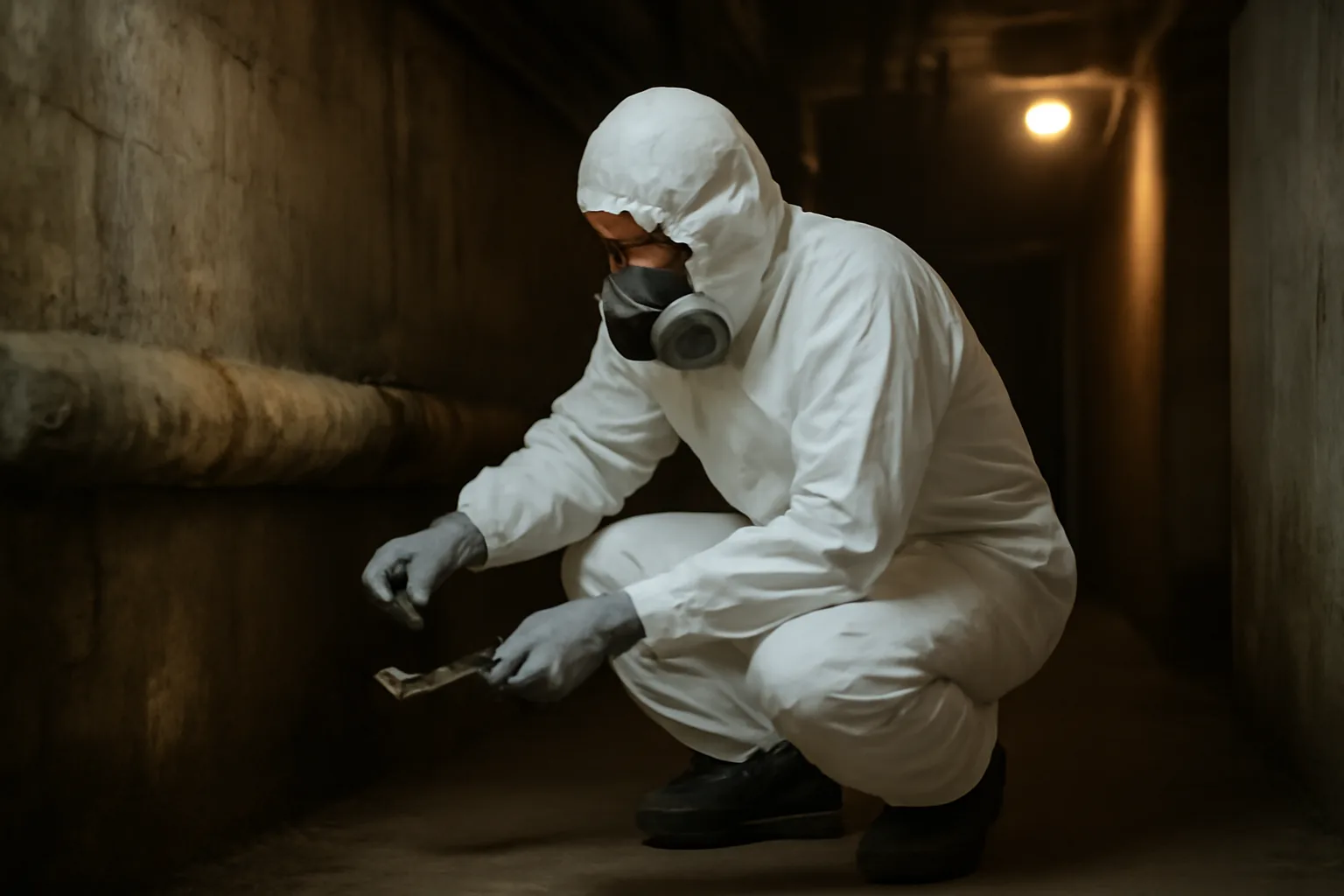
Safety and sampling gear: at minimum, a NIOSH-approved half-face respirator with P100 (HEPA) cartridges, Tyvek disposable coveralls, nitrile gloves, boot covers, and a sample collection kit (Ziploc-style bags, a wetting agent like amended water, and a sampling tool such as a knife or corer). Some employers supply all of this; others expect you to bring your own respirator at minimum.
Documentation tools: a digital camera or phone with good macro capability for photographing suspect materials, a measuring tape, a field logbook or tablet-based inspection app, and pre-numbered sample labels.
Laboratory relationship: you need a NVLAP-accredited laboratory to analyze your bulk samples [4]. Your employer usually has a lab relationship already, but independent inspectors should open an account with a NVLAP-accredited lab before their first solo job. Turnaround runs 24 hours to two weeks depending on priority level and cost.
PPE fit testing comes before you use a tight-fitting respirator in the field. OSHA requires it under 29 CFR 1910.134, more than as a good idea [9]. If your employer doesn't arrange it, several industrial hygiene firms in Phoenix and Tucson offer fit testing for under $50.
If you're building your documentation system from scratch, AsbestosPath's AHERA + Management Planner Kit at /start covers the core document templates and field workflow for $199 one-time, a reasonable shortcut for inspectors who don't want to build every form from zero.
What health and legal standards govern asbestos inspectors in Arizona?
The occupational exposure standard for asbestos workers, inspectors included, sits at 0.1 fiber per cubic centimeter (f/cc) as the permissible exposure limit (PEL) over an eight-hour day, with 1.0 f/cc as the short-term excursion limit [5]. Arizona runs its own OSHA-approved state plan, the Arizona Division of Occupational Safety and Health (ADOSH), which adopts federal OSHA standards for asbestos [6].
What that means on the ground: your employer must provide required protective equipment, conduct air monitoring where exposures may exceed the action level of 0.1 f/cc, and keep exposure records. Inspectors sit in lower-exposure roles than abatement workers, but that doesn't erase the employer's obligations.
On the civil side, inspectors who produce inaccurate or fraudulent bulk sampling reports can face personal liability under state tort law and federal environmental statutes. Keep your sampling documentation tight and your chain of custody records complete.
Arizona Registrar of Contractors (ROC) licensing applies to the abatement contractor side, not to individual inspectors [7]. If you plan to eventually run your own inspection firm and touch any abatement coordination, check ROC requirements early.
What does the annual renewal process look like for Arizona asbestos inspectors?
Annual renewal in Arizona is simple because there's no separate state renewal. You renew your AHERA accreditation by finishing the annual refresher training through any EPA-approved provider.
The inspector refresher is a half-day course, roughly four hours. It costs $100 to $200 in most markets. Your provider issues a new accreditation certificate good for another year.
Don't let it lapse. If your accreditation expires, even for a day, you take the full three-day initial course again. The regulation is not flexible on this point [2]. Set a calendar reminder at least 60 days before your expiration date so you have time to find a seat, travel if needed, and keep a buffer.
Keep all your prior certificates indefinitely. Employers and project owners sometimes ask for documentation of continuous accreditation going back several years, especially on larger institutional or government projects.
If you add Management Planner accreditation later, that refresher is a separate half-day course each year, often available the same day as the Inspector refresher through providers who schedule them back to back.
Where can Arizona asbestos inspectors find approved training providers?
EPA maintains a searchable database of accredited asbestos training providers by discipline and state [8]. Search for Inspector and filter by Arizona or nearby states; many providers serve multiple states, and some offer online components for classroom portions (hands-on sampling technique still requires in-person delivery).
Providers with a physical presence in the Phoenix and Tucson areas run courses regularly. National providers also bring traveling courses through Arizona several times a year. Pricing and scheduling vary, so contact at least two or three providers before committing.
ADEQ itself does not run training courses. Its Air Quality Division site links to relevant federal resources and occasionally posts provider information [10]. Use EPA's database as your primary source rather than third-party lists, which go stale quickly.
For inspectors in neighboring states eyeing Arizona work, the reciprocity picture is simple. Arizona recognizes valid AHERA accreditation regardless of which state's provider trained you, as long as the provider is EPA-approved. Your California AHERA certificate works in Arizona. Your Arizona AHERA certificate may not be enough alone in California, where Cal/OSHA layers on extra requirements. Check the destination state's rules before crossing a border to work.
Frequently asked questions
Do you need a license for asbestos inspector in Arizona?
Arizona doesn't issue a separate state asbestos inspector license. What you need is AHERA Inspector accreditation from an EPA-approved training provider, which requires a three-day initial course and a written exam. For school buildings, AHERA accreditation is federally mandated. For commercial work, ADEQ enforces federal NESHAP standards and most employers and project owners require the same AHERA credential in practice.
How much does asbestos inspector training cost in Arizona?
The initial three-day AHERA Inspector course typically runs $400 to $700 depending on the provider. There's no separate Arizona state license fee since Arizona doesn't issue a state inspector credential. Annual refresher training runs roughly $100 to $200. Adding Management Planner accreditation costs an additional $200 to $400 for the two-day initial course. Confirm current pricing directly with your chosen EPA-approved training provider.
How long does it take to become an asbestos inspector in Arizona?
From enrollment to working with certificate in hand: roughly one to three weeks. The initial AHERA Inspector course is three consecutive days. Exam results are typically same-day. Your accreditation certificate usually arrives within days to two weeks of course completion. Arizona has no separate state application process, so there's no additional waiting period layered on top of the federal training and credentialing step.
Does Arizona have a state asbestos inspector accreditation separate from federal AHERA?
No. Arizona relies on the federal AHERA framework for inspector accreditation rather than maintaining a parallel state credential system. ADEQ handles contractor registration and NESHAP compliance for demolition and renovation projects, but that falls on the abatement contractor side, not on individual inspectors. AHERA accreditation from an EPA-approved provider is what Arizona employers and project owners actually verify.
What is the AHERA refresher training requirement for Arizona inspectors?
AHERA requires annual refresher training to maintain inspector accreditation. The refresher course is roughly four hours (half a day) and costs $100 to $200 through most providers. If your accreditation expires, even by one day, you must retake the full three-day initial course rather than just the refresher. Arizona has no separate state renewal process on top of this federal requirement.
What laboratory do Arizona asbestos inspectors use for bulk samples?
Bulk samples from asbestos inspections must be analyzed by a NVLAP-accredited laboratory under federal AHERA and NESHAP requirements. NIST runs the NVLAP program, and its directory is searchable by discipline and state. Most Arizona inspection firms have established lab accounts; independent inspectors should set up a relationship before their first solo job. Turnaround ranges from 24-hour rush service to standard one-to-two-week turnaround depending on cost.
Can I work as an asbestos inspector in Arizona with a license from another state?
Generally yes, because Arizona recognizes valid AHERA accreditation regardless of which state's EPA-approved training provider issued your certificate. If you hold current AHERA Inspector accreditation from an EPA-approved provider, that credential is recognized across the AHERA framework. Going the other direction (using Arizona AHERA accreditation to work in California or Colorado) may require additional state-specific credentials. Confirm with the destination state before working there.
What is the OSHA exposure limit for asbestos that Arizona inspectors need to know?
OSHA sets the permissible exposure limit for asbestos at 0.1 fiber per cubic centimeter as an eight-hour time-weighted average, with a short-term excursion limit of 1.0 f/cc. Arizona operates its own state OSHA plan (ADOSH) that adopts these federal standards. Inspectors are generally in lower-exposure roles than abatement workers, but employer air monitoring and PPE obligations still apply when exposures may exceed the action level.
Does ADEQ register individual asbestos inspectors in Arizona?
No. ADEQ registers and licenses asbestos abatement contractors and receives project notifications for regulated demolition and renovation work. Individual inspectors are not separately registered with ADEQ. Your AHERA accreditation certificate from an EPA-approved training provider is the credential that matters at the individual level. Contractor-side registration requirements fall on your employer if you work for a licensed firm.
How many days of training is the AHERA Inspector initial course?
The AHERA Inspector initial training course is at minimum three days under EPA's Appendix C model curriculum for Subpart E of 40 CFR Part 763. Some providers run it Monday through Wednesday, others over a weekend. The course covers bulk sampling techniques, assessment of ACM, legal requirements, and safety practices, and ends with a written exam. Your accreditation certificate follows course completion and exam passage.
What is the NESHAP notification threshold that triggers ADEQ involvement in Arizona?
Under federal NESHAP standards enforced by ADEQ, a renovation or demolition project triggers regulated asbestos requirements when it disturbs at least 260 linear feet of asbestos on pipes, 160 square feet on other facility components, or 35 cubic feet in cases where the amounts cannot be measured. Inspectors' pre-project surveys determine whether these thresholds are met, which then determines whether ADEQ notification is required before work begins.
Is Management Planner accreditation required for asbestos inspectors in Arizona?
Management Planner accreditation is not required to work as an inspector in Arizona, but it's additive in a useful way. Inspectors who hold both credentials can write management plans for school buildings, which expands the scope of work you can take on and often commands higher billing rates. The Management Planner initial course is two additional days on top of the Inspector course, and many providers schedule them back to back.
What respirator do Arizona asbestos inspectors need for field work?
A NIOSH-approved half-face respirator with P100 (HEPA) filter cartridges is the standard minimum for asbestos inspection work. Before using a tight-fitting respirator in the field, OSHA requires a fit test under 29 CFR 1910.134. Your employer is responsible for arranging fit testing; if they don't, industrial hygiene firms in Phoenix and Tucson typically offer it for under $50. Disposable Tyvek coveralls, gloves, and boot covers are also standard kit.
How do I find EPA-approved asbestos inspector training in Arizona?
EPA maintains a searchable database of accredited providers by discipline. Search for Inspector and filter by state. Providers in the Phoenix and Tucson metro areas run courses regularly; national providers also bring courses to Arizona several times per year. Contact at least two or three providers to compare pricing and schedules before enrolling, as both vary meaningfully.
Sources
- EPA, Asbestos Laws and Regulations: EPA approves training providers for AHERA inspector accreditation; Arizona relies on this federal framework rather than a separate state credential
- 40 CFR Part 763 Subpart E, Appendix C, Asbestos-Containing Materials in Schools: AHERA requires a minimum three-day initial inspector training course, a written exam, and annual refresher training; lapsed accreditation requires retaking the full initial course
- 40 CFR Part 61 Subpart M, National Emission Standards for Asbestos: NESHAP triggers regulated asbestos requirements at 260 linear feet, 160 square feet, or 35 cubic feet of regulated ACM; ADEQ enforces these standards in Arizona
- NIST, National Voluntary Laboratory Accreditation Program (NVLAP): Bulk samples from asbestos inspections must be analyzed by a NVLAP-accredited laboratory under AHERA and NESHAP requirements
- OSHA, 29 CFR 1910.1001, Asbestos Standard for General Industry: OSHA PEL for asbestos is 0.1 f/cc as an eight-hour TWA; action level is 0.1 f/cc; short-term excursion limit is 1.0 f/cc
- Arizona Division of Occupational Safety and Health (ADOSH), State Plan Information: Arizona operates an OSHA-approved state plan (ADOSH) that adopts federal OSHA asbestos standards for general industry and construction
- Arizona Registrar of Contractors, License Information: Arizona ROC licensing requirements apply to asbestos abatement contractors; individual inspectors are not separately registered through ROC
- EPA, Find an Asbestos Professional or Training Provider: EPA maintains a searchable database of accredited asbestos training providers by discipline and state, including AHERA Inspector training
- OSHA, 29 CFR 1910.134, Respiratory Protection Standard: OSHA requires fit testing before any employee uses a tight-fitting respirator in the field, including asbestos inspection work
- ADEQ, Air Quality Division, Asbestos Program: ADEQ administers Arizona asbestos program under EPA delegation, handles contractor registration and project notifications for NESHAP-regulated demolition and renovation